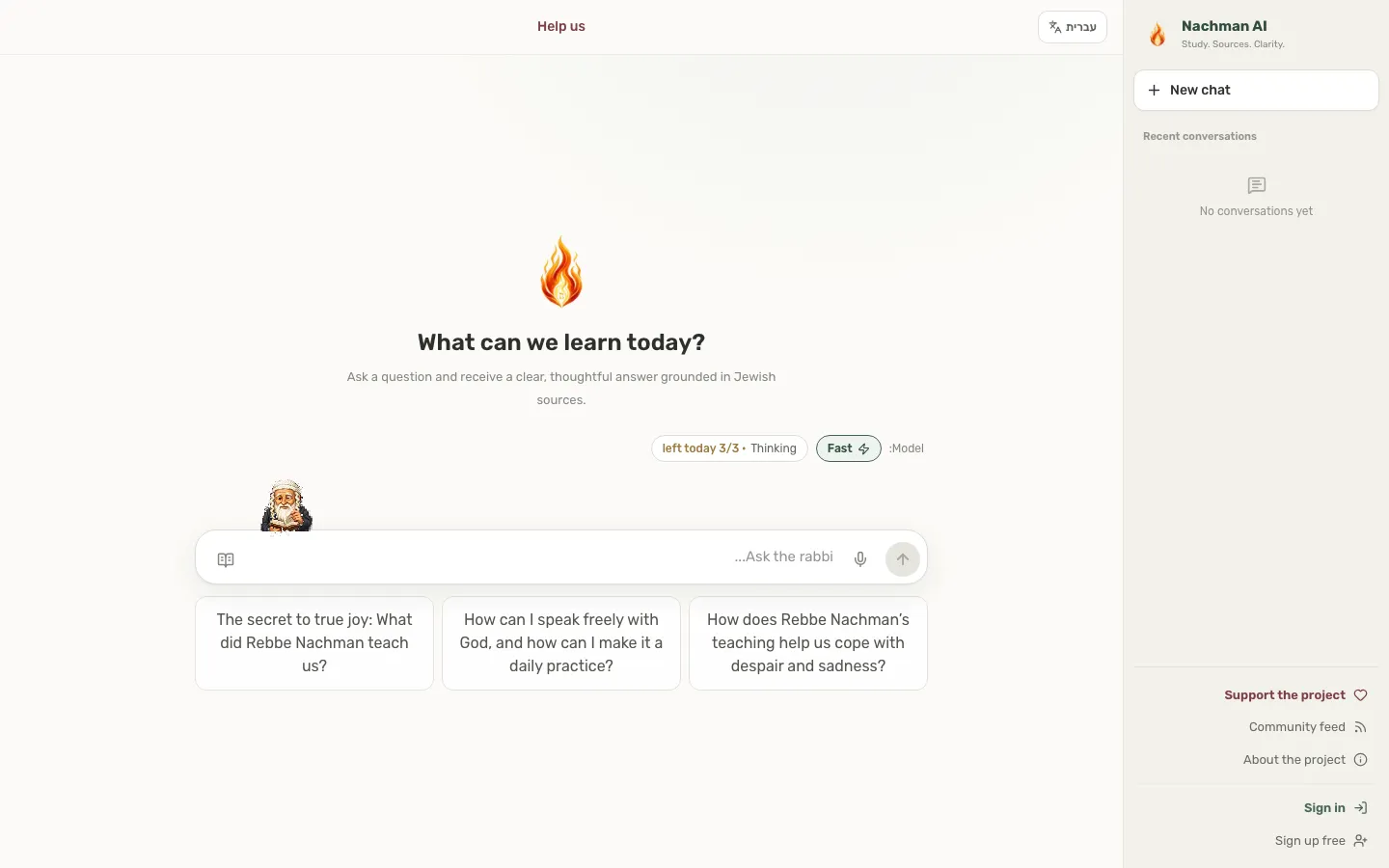
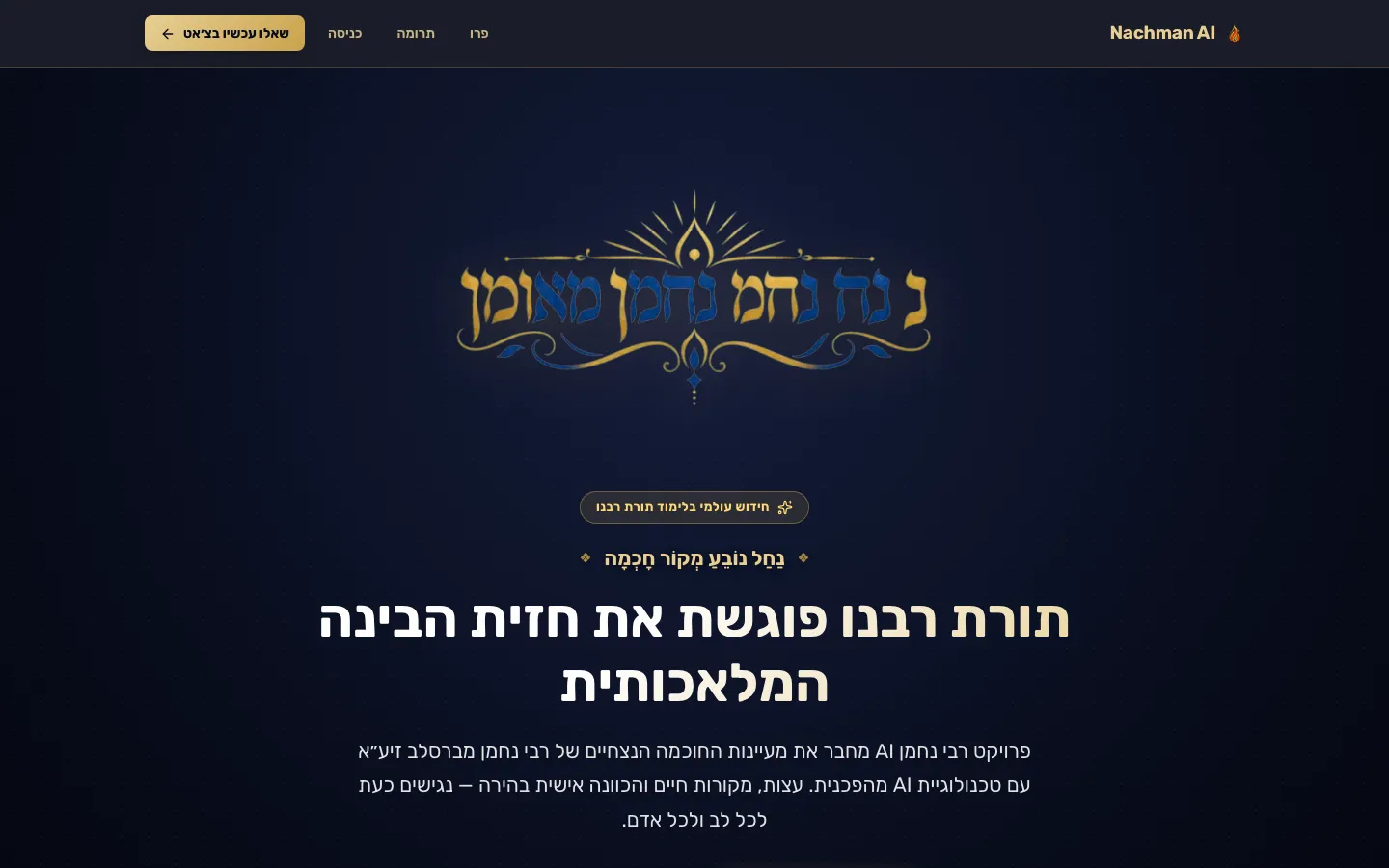
Nachman AI
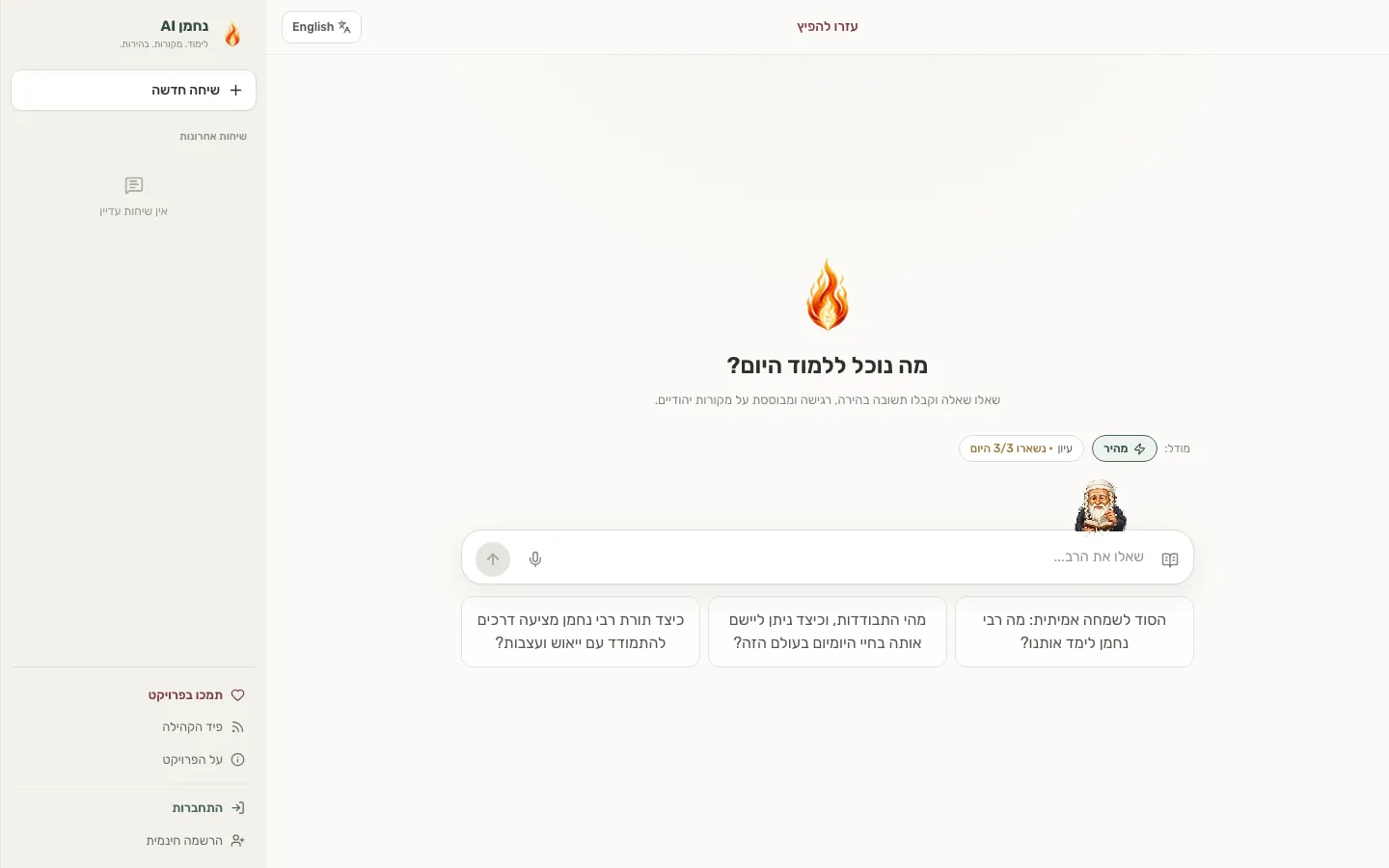
An AI assistant for the teachings of Rabbi Nachman of Breslov that answers with sources, in text and voice, on web and mobile.
- Web
- iOS
- Android
The challenge
The goal: anyone can ask a question about Rabbi Nachman’s teachings and get an accurate answer with a source, without spending hours searching through books. That meant building a knowledge base from thousands of pages, pairing it with a language model that doesn’t make things up, and making it fast in both text and voice.
Every layer had its own challenge: an ingestion pipeline that splits books and embeds them as vectors, streaming answers to the client, real-time voice, payments and subscriptions, and two mobile apps that are built and published automatically from GitHub Actions to TestFlight and Google Play.
Architecture
Stack
- Next.js
- React
- Supabase
- pgvector
- Claude
- OpenAI Realtime
- SSE
- WebSockets
- Capacitor
- PayPal
- Vercel
- GitHub Actions
Hard problems I solved
01 Streaming answers with sources
- Approach
- Semantic search in pgvector over about 30,000 source passages, then Claude streams the answer word by word over SSE. Every quote links back to the passage it came from.
- Result
- The answer starts appearing right away instead of after a long wait, and every claim can be checked against its source.
02 Real-time voice questions
- Approach
- Browser audio goes through an audio worklet to OpenAI Realtime over a WebSocket. The server mints a short-lived key per session, so the secret key never reaches the client.
- Result
- Users ask out loud and watch the transcript appear as they speak, with no API keys exposed.
03 Cost and safety under control
- Approach
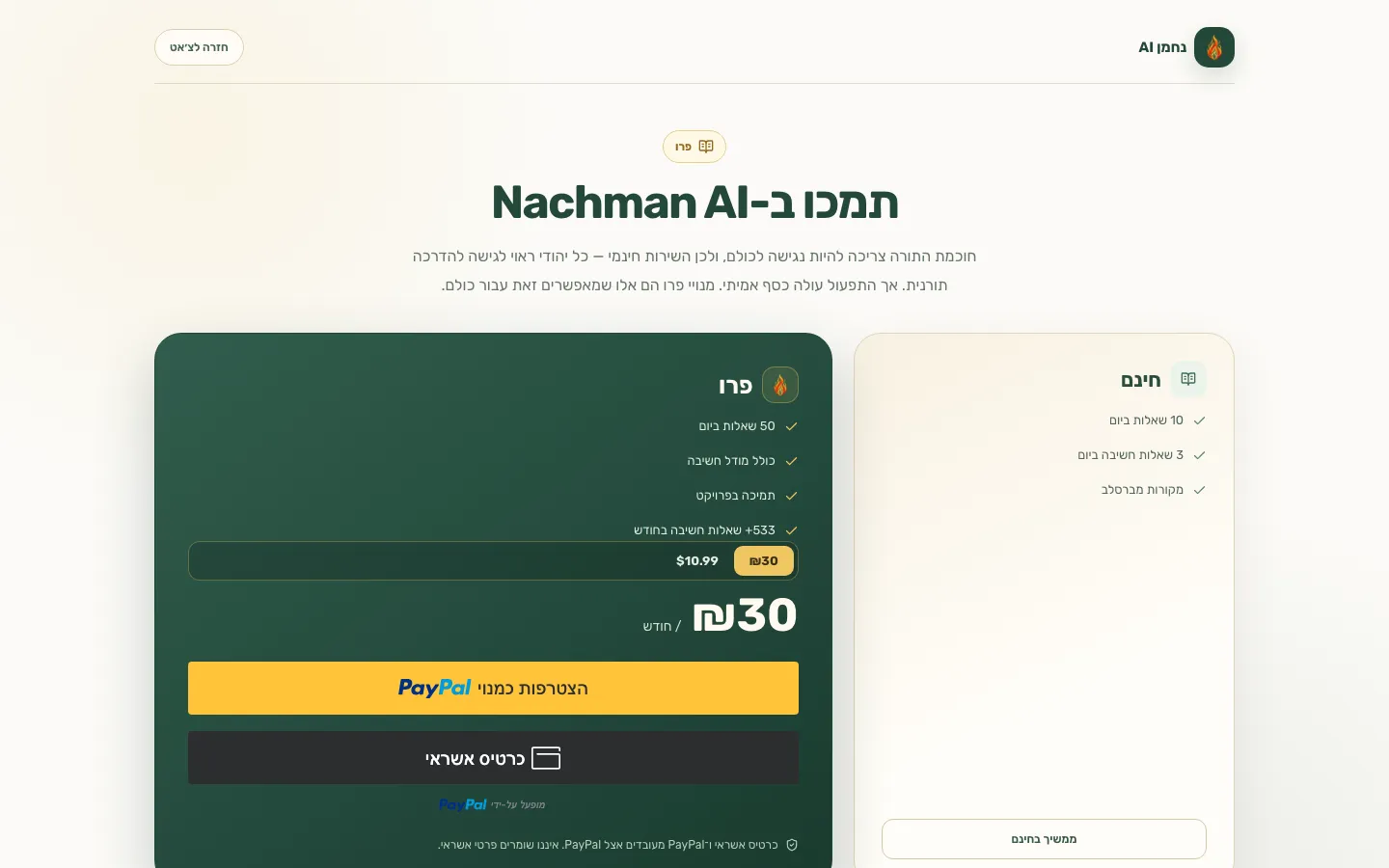
- Per-user quotas, credits and rate limiting, a monthly LLM budget, sensitive-topic screening before the model is called, and two model tiers (fast and premium).
- Result
- Predictable monthly cost, and sensitive questions get a responsible answer.
By the numbers
- Indexed source passages
- 30K+
- Automated tests
- 300+
- Platforms
- 3
Screenshots